SIM Career App
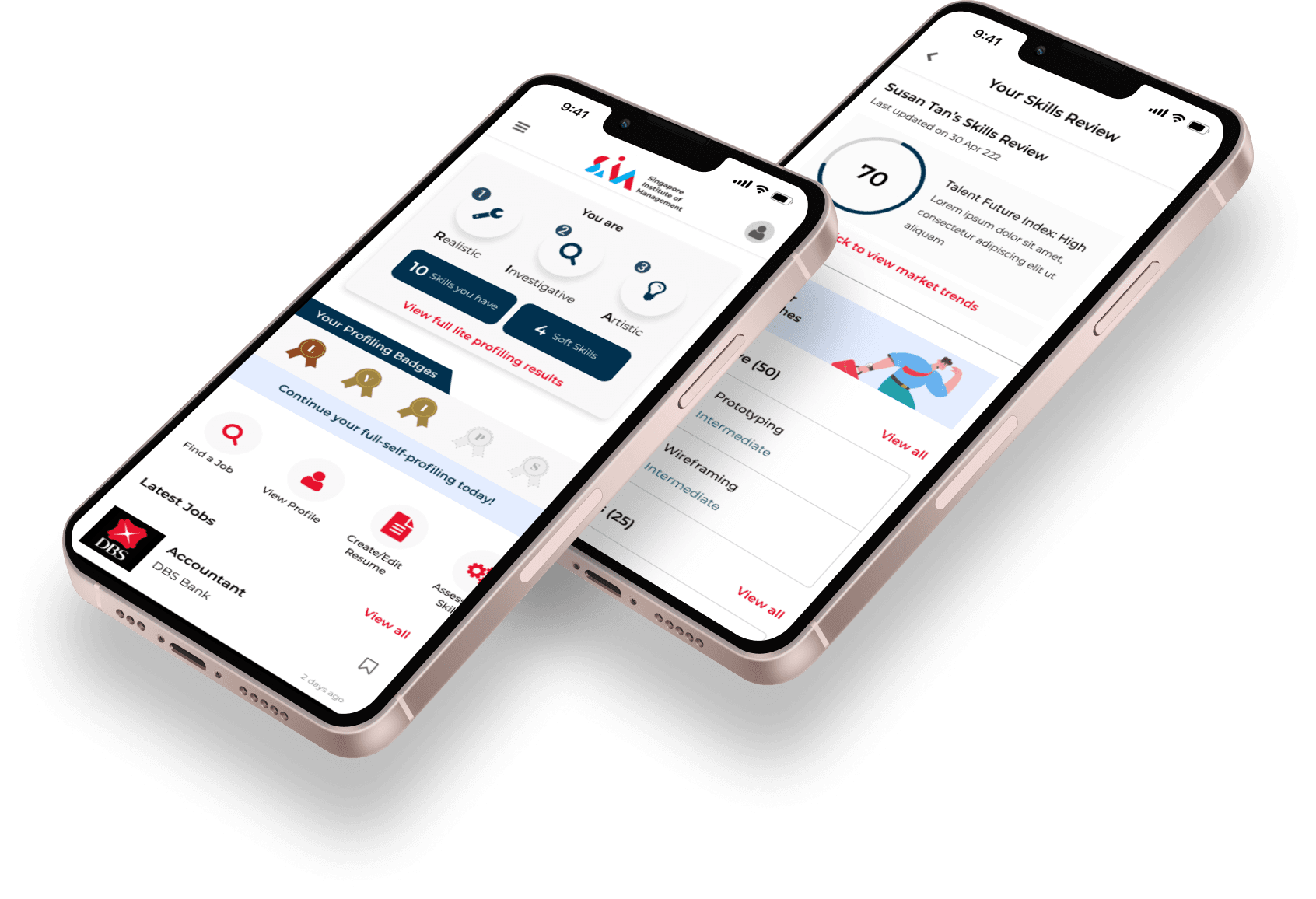



The Problem
The team started with user research, interviewing 20 users from SIM’s target audience to understand their goals and their feelings towards career planning.
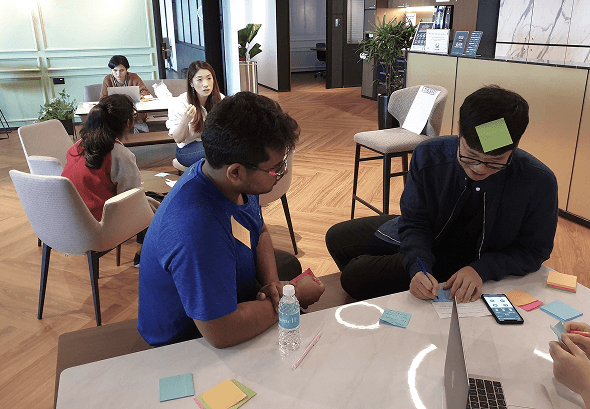
From the insights gathered, I identified 4 types of user personas:
Students and Professionals who had a stronger interest in career planning
Students and Professionals who had a weaker interest in career planning




We discovered that most users did not see career planning as important and they used career portals only transactionally, logging on to look for jobs or upskilling courses as needed.
Challenge
Mismatch between users' and the organisation's goals
Since users primarily wanted to search for jobs and courses, they would be frustrated if made to do career planning in a way that they felt detracted from their immediate goals.
Solutions
1: Nudging users towards career planning with CTAs and teasers
To encourage users to do career planning, I decided to show them its tangible benefits via features like skills matches for jobs and use calls-to-action (CTAs) to nudge them toward doing career planning activities.
To execute this strategy effectively, I first created user flows for job and course searching for each of the 4 personas.
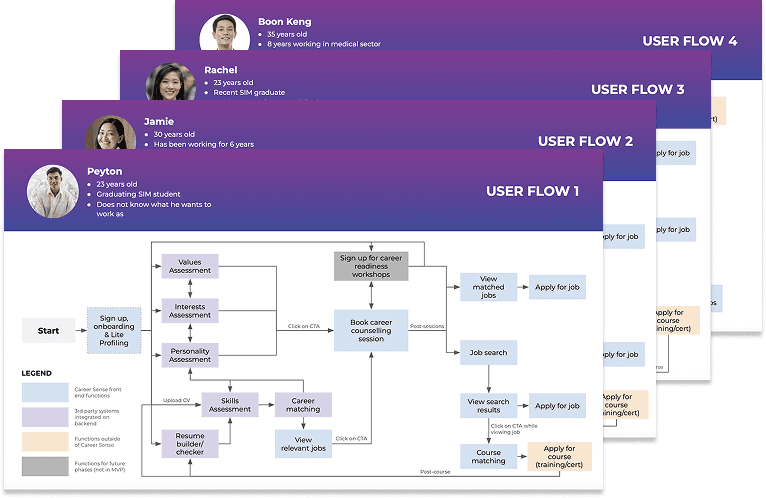
Next, I led the team in analysing these user flows, identifying optimal placements for the features and CTAs that would drive users toward career planning activities.
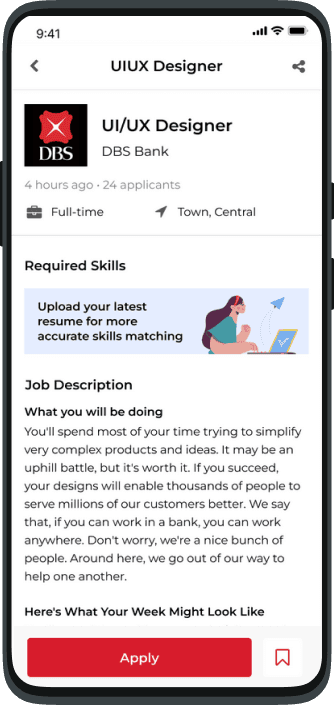
For example, when a user who had not done the Skills Assessment went to do a job search, they would see a noticeable CTA inviting them to do the assessment to see jobs that matched their current skill set.
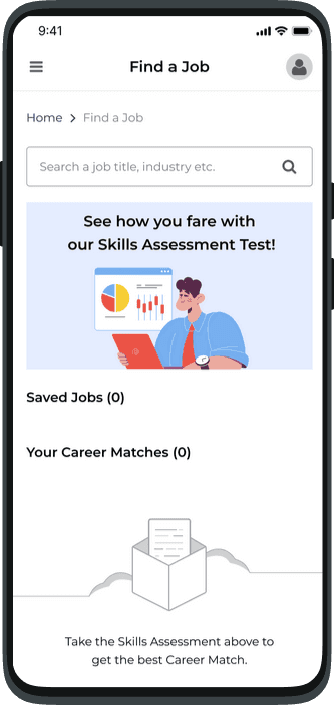
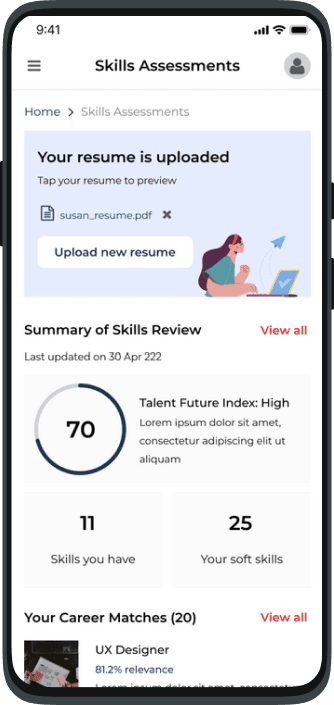
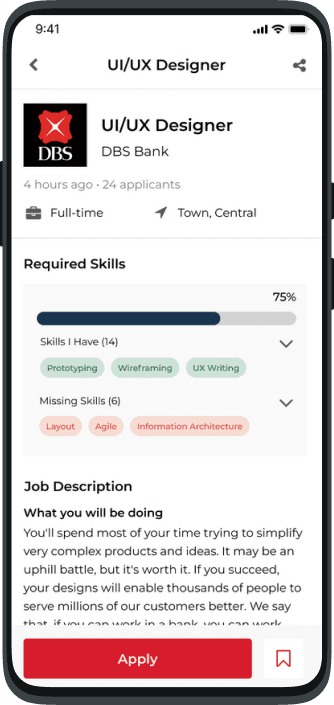
And once the user had done the assessment, they would see how well their skills matched a job within each job posting. Otherwise, they would see a CTA on the same spot inviting them to do the assessment.
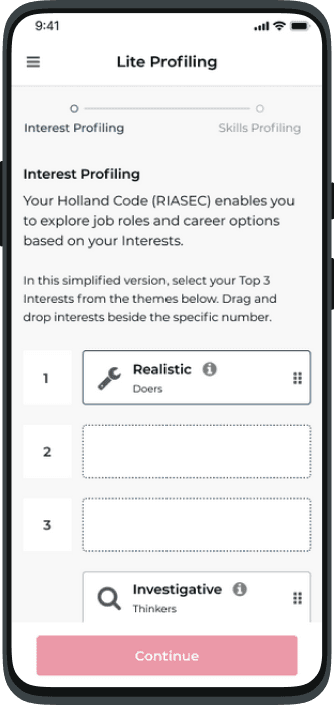
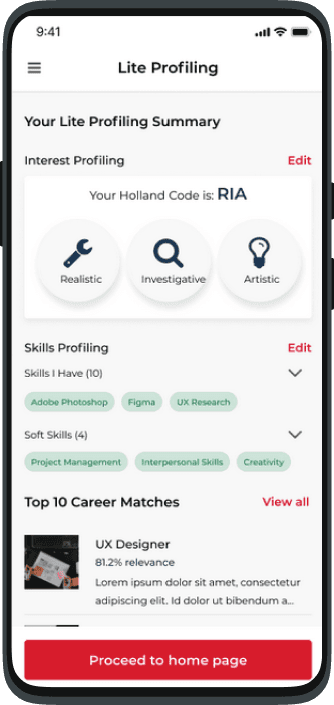
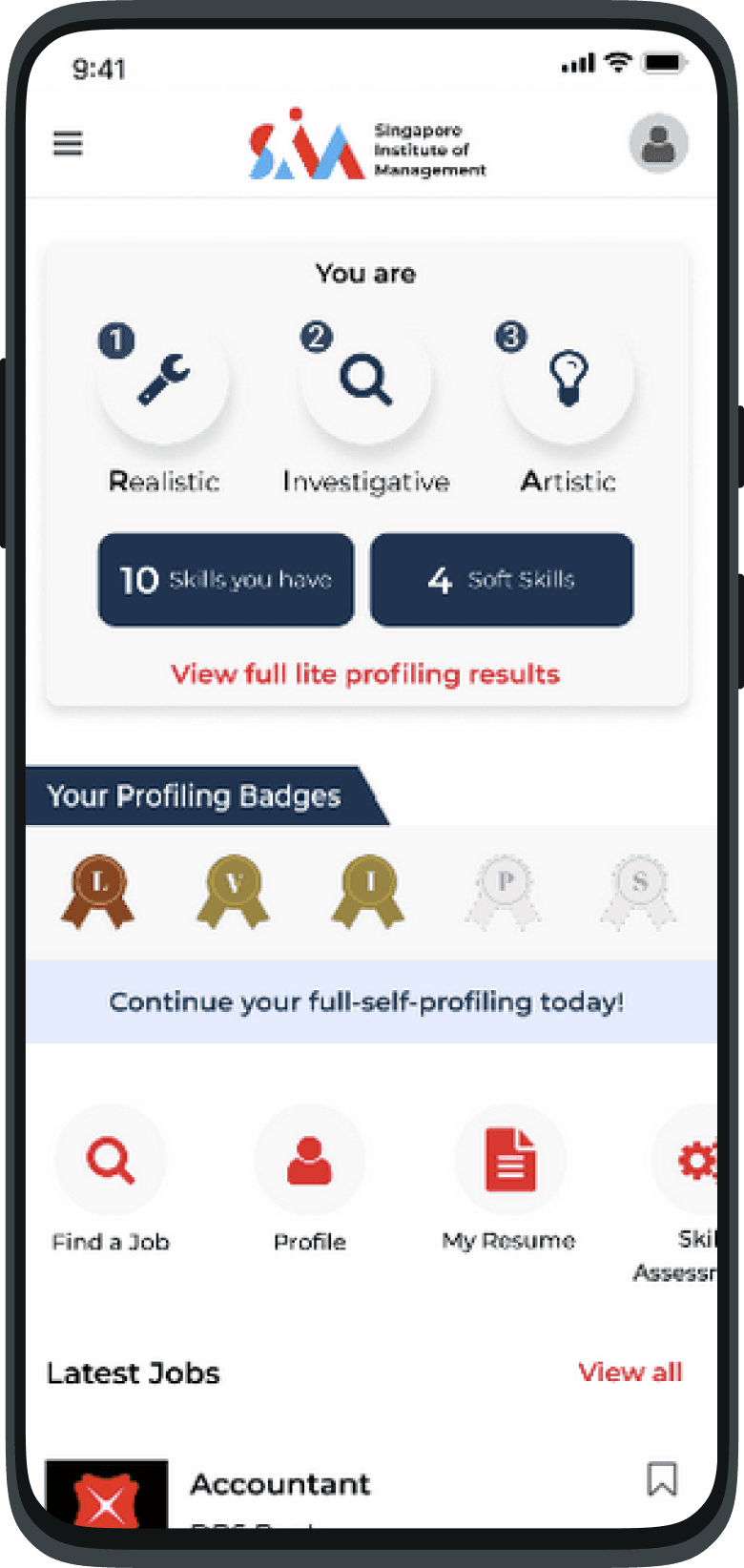
To tease the benefits of career planning, the app also provided early insights through Lite Profiling during the onboarding process. Users could choose to do a self-assessment that yielded partial but quick insights on themselves and their career matches.
2: Gamification
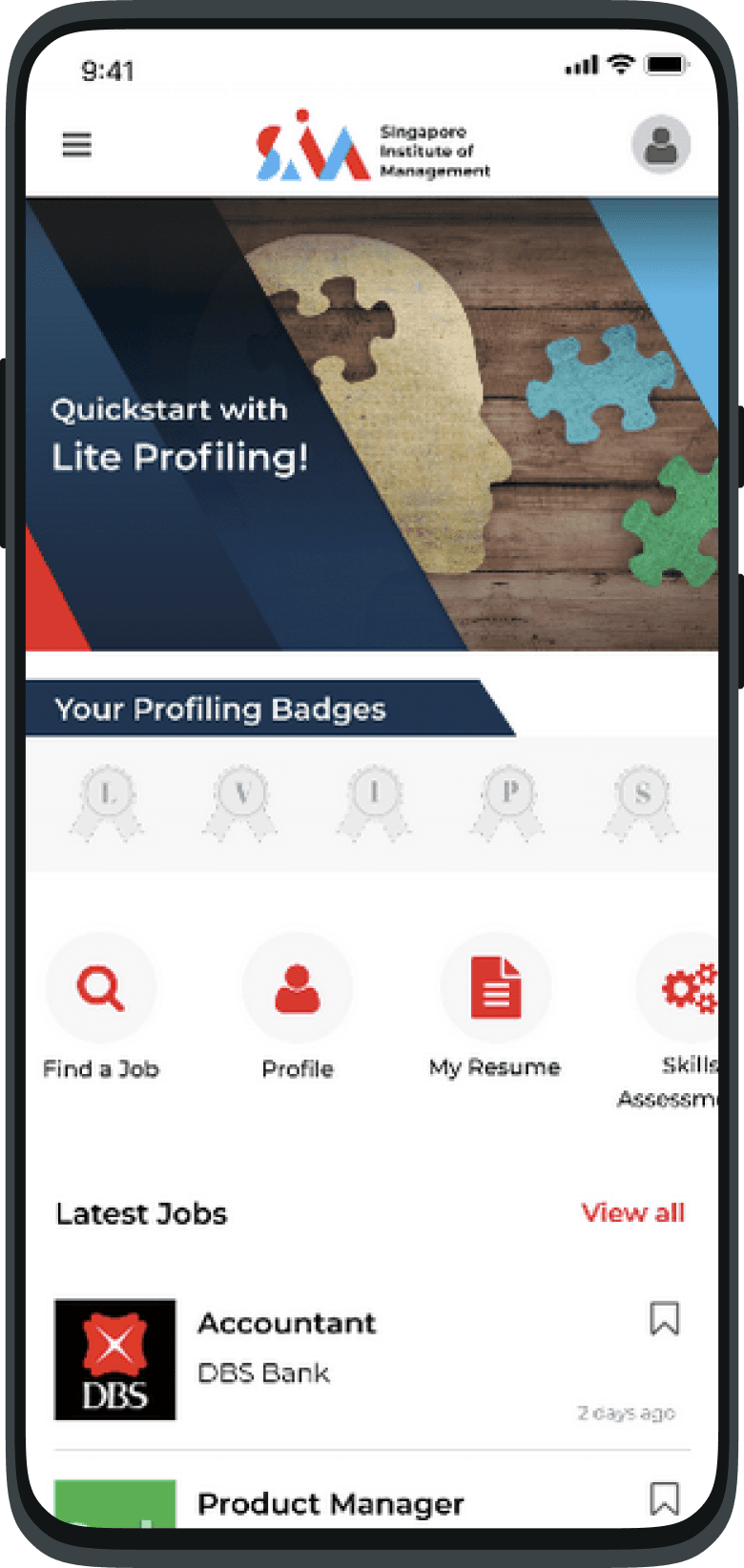
As an extra incentive for users to do career planning activities, we also added an element of gamification through collecting badges.
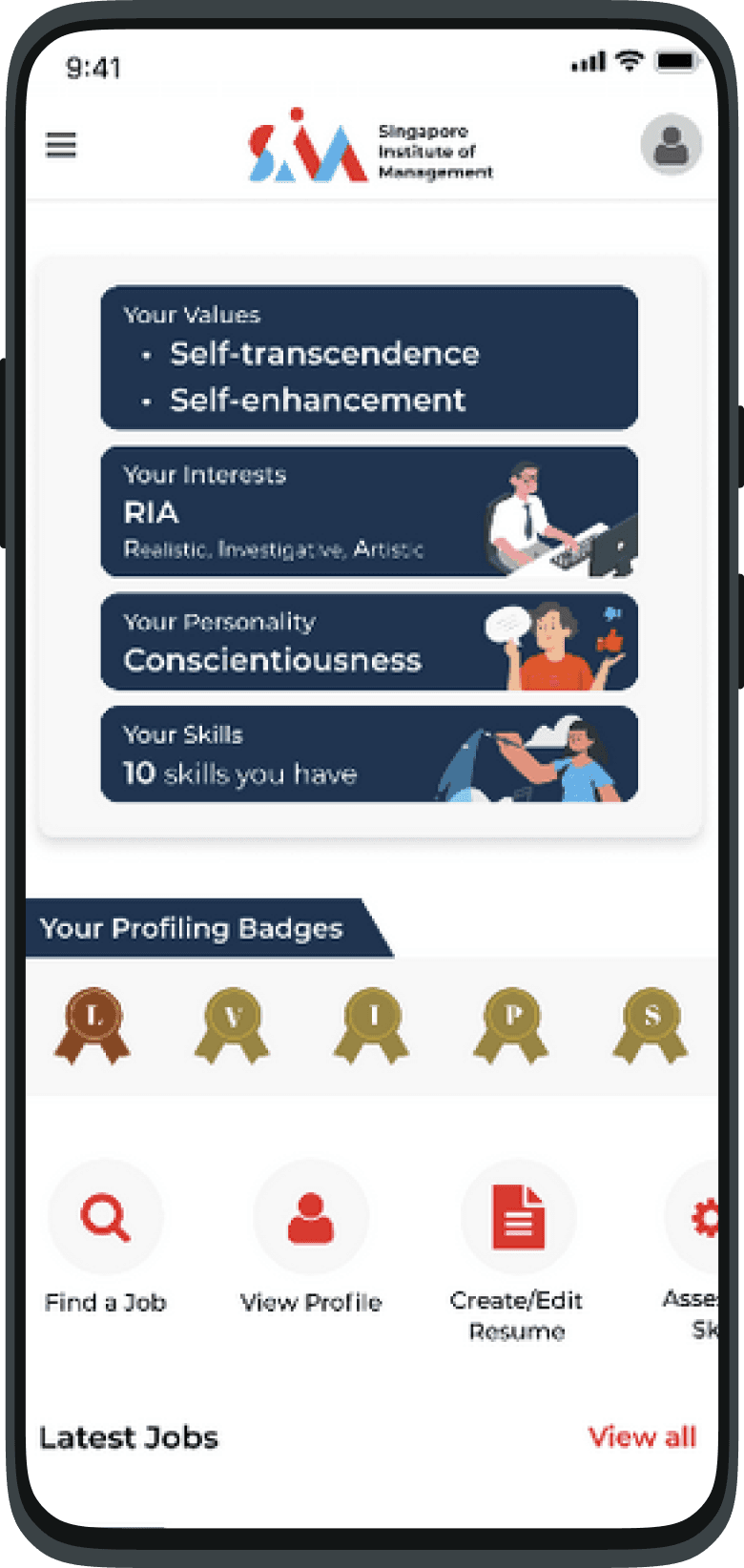
Users would see eye-catching Profiling Badges on their Home Screen as they completed corresponding activities.
The design of the badges evokes the concept of mini awards and complement the overall educational feel of the app, which feature welcoming colours and inviting imagery.
Outcome
After creating an early interactive prototype, I led usability testing for the job search flow to get a quick sense of whether our design was working. We found that all users involved engaged with our CTAs and did the Skills Assessment as they did their job searches.
Discovering an unforeseen problem
However, once onboarding and Lite Profiling had been added to our prototype, more testing showed that users came to think Lite Profiling was sufficient and tended to skip the full Skills Assessment.
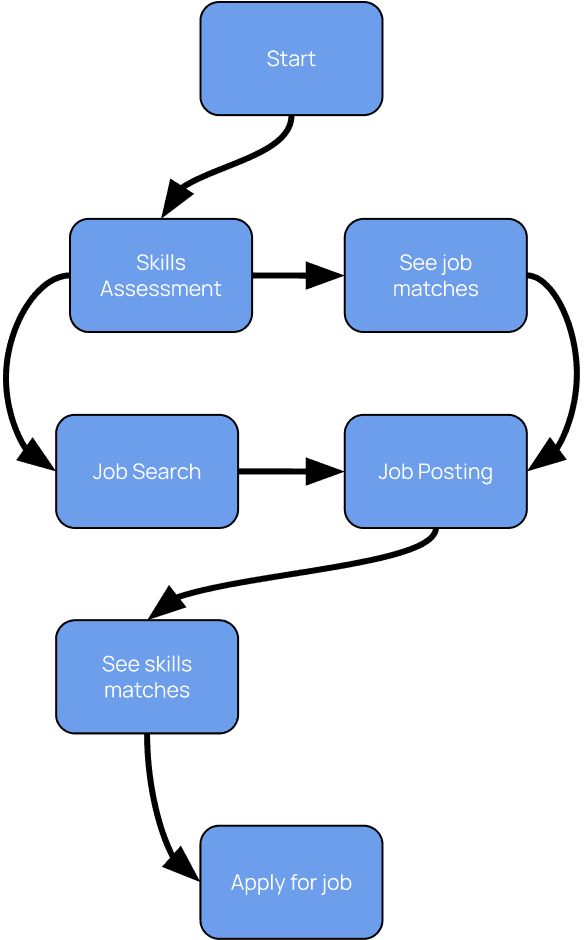
User flow before addition of Lite Profiling. Users would do their Skill Assessment and see the full job and skills matches.
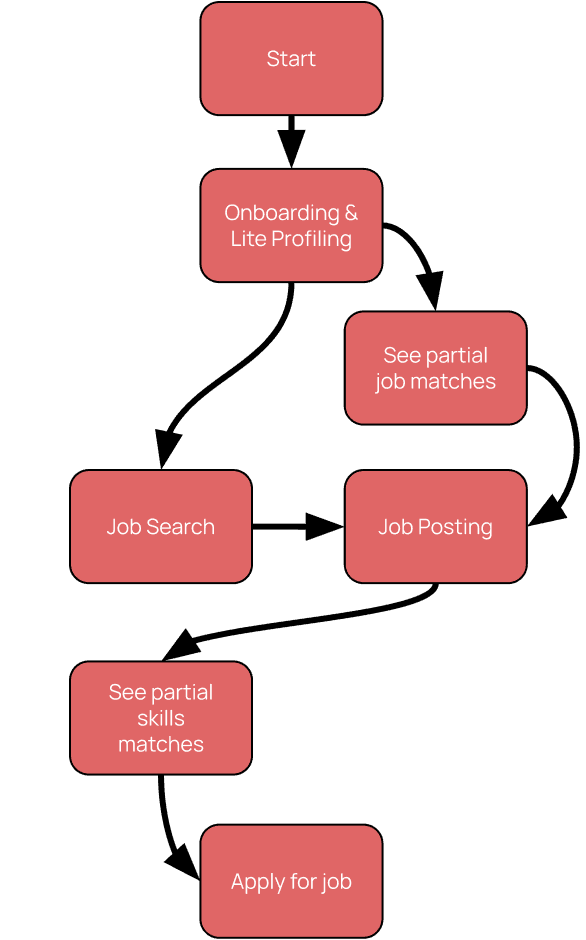
User flow after addition of Lite Profiling. Users would skip the full Skill Assessment and see only partial job and skills matches.
To incentivise users to do the full Skills Assessment again, I decided to remove partial skills matches from job postings and replace them with a CTA to do the assessment to unlock matches.
Final design
The final design took users through a journey of discovery in career planning.
Results and reflections
As I had decided to adopt Lean and Agile practices, including testing our design early, we were able to complete the project efficiently within 4 months. The client was happy with how we brought to life their vision of bringing career planning to users, with 90% of users doing the activities during our final round of testing.
However, inter-agency developer handoff was an afterthought and was handled mainly through a presentation deck, with no assurance that our design would be implemented well.
Looking back, consolidating the user stories I had written during the design sprints into a handoff document would have better supported the development process.